In today’s fast-moving digital world, abbreviations and slang are everywhere. From TikTok comments to WhatsApp chats, people often use short forms that can be confusing if you’re not familiar with them.
One term that appears both in medical discussions and casual online conversations is “ADHD Meaning”.
Understanding the ADHD meaning is important not only for better communication in texting culture but also for building awareness about a real neurodevelopmental condition that affects millions of people worldwide.
In this guide (updated for 2026), we’ll break down what ADHD means, how it’s used in conversations, and how to avoid common misunderstandings.
What Does ADHD Mean? (Definition & Origin)
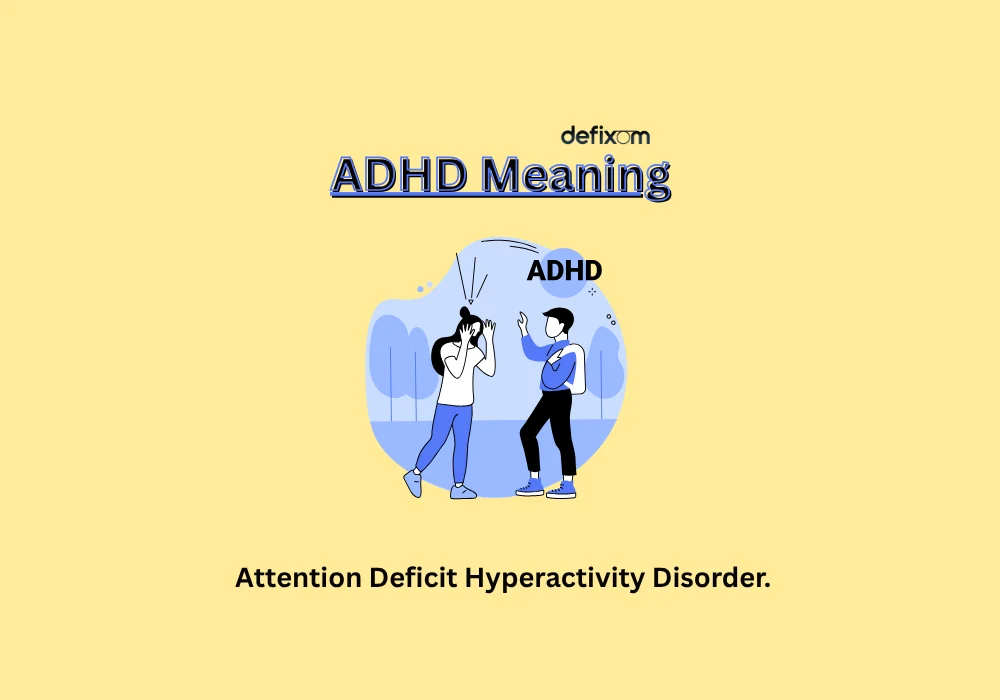
The term ADHD meaning stands for Attention Deficit Hyperactivity Disorder. It is a medically recognized condition classified as a neurodevelopmental disorder.
The related entity is Attention Deficit Hyperactivity Disorder, commonly known as ADHD.
✔ Simple Definition:
ADHD is a condition that affects a person’s ability to:
- Focus or maintain attention
- Control impulsive behavior
- Manage hyperactivity levels
📌 Origin of the Term:
The medical term ADHD became widely used in the late 20th century when psychologists and doctors better understood attention-related disorders in both children and adults. Over time, awareness has grown, especially with the rise of social media discussions.
🧠 Important Insight:
ADHD is not just “being distracted” or “lazy.” It is a neurological condition that affects brain function, behavior regulation, and attention processing.
How “ADHD” Is Used in Texts, Chats & Online Culture
Interestingly, the ADHD meaning has evolved in internet culture. While it still refers to the medical condition, people also use it informally in chats and social media.
💬 1. Medical Context (Proper Use)
This is the correct and respectful usage:
- “My doctor diagnosed me with ADHD.”
- “She’s learning how to manage her ADHD symptoms.”
- “ADHD affects both kids and adults.”
😂 2. Casual Internet Use (Slang/Hyperbole)
Online, especially on TikTok, Instagram, and Twitter/X, people sometimes use “ADHD” informally to describe:
- Getting distracted easily
- Jumping between tasks
- Losing focus quickly
Example:
- “I came to clean my room and ended up watching 3 hours of random videos… my ADHD is showing 😭”
- “Started studying physics, ended up organizing my entire desk instead. ADHD moment.”
⚠️ Important: This informal use is controversial because it can oversimplify a real medical condition.
Examples of ADHD in Conversations
Let’s look at real-life style examples so you understand how the term appears in different contexts.
📱 Text Message Examples:
- Friend 1: “Why didn’t you finish your assignment?”
Friend 2: “Honestly, my ADHD made me switch tasks like 10 times.” - “I can’t sit still today, my ADHD is acting up.”
💻 Social Media Examples:
- “POV: You have ADHD and open 20 tabs while doing homework.”
- “ADHD brain: starts 5 hobbies, finishes none 😭”
🧑⚕️ Educational Example:
- “ADHD is often diagnosed in childhood but can continue into adulthood.”
Common Mistakes or Misunderstandings About ADHD
Many people misunderstand the ADHD meaning, especially in online conversations. Here are some common errors:
1. Thinking ADHD is just distraction
ADHD is not simply “not paying attention.” It involves brain-based differences in executive functioning.
2. Using ADHD as a joke too casually
While internet humor exists, using ADHD to describe everyday laziness or distraction can be insensitive to people who actually live with the condition.
3. Assuming only kids have ADHD
ADHD can continue into adulthood and affect work, relationships, and daily life.
4. Believing it’s caused by bad parenting
ADHD is not caused by parenting style. It is linked to neurological and genetic factors.
Related Slang & Abbreviations You Might See
If you’re learning ADHD meaning, here are some related internet slang terms often seen in similar contexts:
🔹 Common Internet Slang:
- ADD – Older term often used for attention issues (now included under ADHD)
- Brain fog – Feeling mentally unclear or unfocused
- Distracted era – Trend phrase for losing focus easily
- Hyperfocus – Intense concentration on one task for long periods (common in ADHD discussions)
🔹 Social Media Terms:
- “Squirrel brain” – Slang for easily distracted thinking
- “Spiral thinking” – Jumping between unrelated thoughts
- “Neurodivergent” – A broader term including ADHD, autism, and similar conditions
ADHD in Modern Digital Culture (2026 Trend Update)
In 2026, discussions around ADHD have become more mainstream than ever. Platforms like TikTok, Reddit, and Instagram have turned ADHD into a widely discussed topic in:
- Mental health awareness content
- Study motivation videos
- Productivity hacks for ADHD brains
- Personal storytelling posts
However, experts emphasize the importance of separating educational awareness from internet exaggeration.
📊 Current Trend Insight:
- ADHD-related hashtags are among the most viewed mental health topics online
- More adults are getting diagnosed later in life
- Online communities are helping reduce stigma but also spreading misinformation in some cases
How to Use “ADHD” Correctly in Texting
If you want to use the term properly, here are some guidelines:
✔ Do:
- Use it respectfully when talking about diagnosis or experiences
- Use it in educational or awareness contexts
- Be mindful of tone when referring to real symptoms
❌ Don’t:
- Use it to mock or insult someone
- Use it casually as a synonym for “lazy” or “confused”
- Spread misinformation about the condition
💡 Better Alternative in Casual Speech:
Instead of saying “my ADHD is out of control,” you can say:
- “I’m super distracted today”
- “My focus is all over the place”
This keeps your language respectful while still expressing the feeling.
Why Understanding ADHD Meaning Matters
Knowing the ADHD meaning is important for two key reasons:
1. Better Communication
You can understand conversations online without confusion, especially in memes, comments, and discussions.
2. Awareness & Respect
Understanding ADHD helps reduce stigma around mental health conditions and promotes empathy toward people who experience it.
Conclusion:
To sum it up, the ADHD meaning refers to Attention Deficit Hyperactivity Disorder, a real neurodevelopmental condition that affects focus, behavior, and impulse control. While it is sometimes used casually in internet slang, it’s important to remember that it represents a real medical condition experienced by millions of people worldwide.
In modern texting and social media culture, ADHD has become both a medical term and a loosely used expression for distraction—but context matters a lot. Using it respectfully helps promote awareness and avoids misunderstanding.
As online language continues to evolve in 2026, staying informed about terms like ADHD helps you communicate smarter and more responsibly.

I am the voice behind Defixom, a site dedicated to explaining meanings in a clear and simple way. I love turning confusing words into easy explanations so anyone can understand them in seconds. My goal is to make learning meanings fast, friendly, and stress-free.