Introduction: Why Understanding “ACK” Matters in Modern Texting
If you’ve ever received a short, blunt reply like “Ack Meaning” in a chat, you might have paused for a second—Was that rude? Was it just acknowledgment? You’re not alone.
In today’s fast-paced digital communication, abbreviations like Ack Meaning are everywhere—used in texting, gaming, emails, and even professional chats.
Understanding what “ack meaning” actually is can help you avoid confusion, misinterpretation, or even awkward conversations.
This guide is updated for 2026 and breaks down everything you need to know about ACK meaning in text, including its origin, usage, examples, and common mistakes.
Whether you’re chatting with friends or replying in a work Slack channel, you’ll know exactly how to use it.
What Does “ACK” Mean? (Definition & Origin)
✔️ Simple Definition
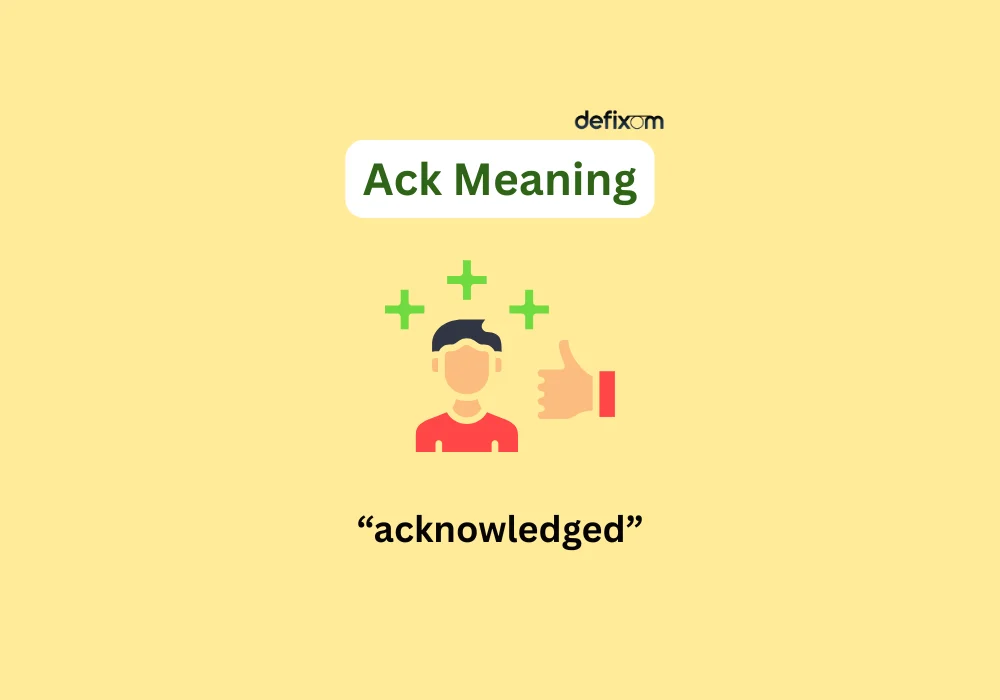
ACK is short for “acknowledged.”
It means:
- “I got your message”
- “Understood”
- “Noted”
👉 In texting, ACK is a quick way to confirm receipt of information without adding extra words.
🧠 Origin of “ACK”
The term ACK comes from:
- Computer networking & programming (short for acknowledgment packet)
- Used in systems to confirm data was received successfully
Over time, it moved into:
- Workplace communication (emails, Slack, Teams)
- Casual texting and online chats
Now, it’s widely used in both formal and informal conversations.
How to Use “ACK” in Texts or Chat
📱 Common Usage Scenarios
You can use ACK in situations where you want to quickly confirm something:
- ✔️ Receiving instructions
- ✔️ Confirming a message
- ✔️ Acknowledging updates
- ✔️ Responding without continuing the conversation
💬 Tone Matters
While ACK is efficient, its tone depends on context:
| Context | Meaning |
|---|---|
| Friendly chat | Casual acknowledgment |
| Work message | Professional confirmation |
| Short reply only | Can feel cold or abrupt |
👉 Tip: Add emojis or extra words to soften it:
- “Ack 👍”
- “Ack, got it!”
- “Ack, thanks!”
Examples of “ACK” in Conversations
📌 Casual Texting Examples
- Friend: “I’ll meet you at 7.”
You: “Ack 👍” - Friend: “Don’t forget the snacks!”
You: “Ack, already got them 😄”
💼 Work / Professional Examples
- Boss: “Send the report by 5 PM.”
You: “ACK” - Team Member: “Meeting moved to 3 PM.”
You: “Ack, noted.”
🎮 Gaming / Online Chat Examples
- “Enemy spotted on the left!”
→ “ACK!” - “Defend the base!”
→ “Ack, on it!”
😂 Funny / Relatable Usage
- Mom: “Clean your room.”
You: “ack…” 😅 - Friend: “We’re waking up at 5 AM tomorrow.”
You: “Ack 😭”
👉 Here, “ack” can also express reluctant agreement or mild frustration.
Common Mistakes or Misunderstandings
Even though ACK meaning is simple, people often misuse or misinterpret it.
1. Thinking It’s Rude
A plain “ACK” can feel:
- Cold
- Dismissive
- Too short
👉 Fix: Add warmth
- “Ack, thanks!”
- “Ack, got it 😊”
2. Using It in Emotional Conversations
Avoid using ACK when someone shares something important:
- ❌ “I’m feeling really stressed today.”
→ “ACK” (sounds insensitive) - ✔️ Better response:
→ “I understand, hope you’re okay ❤️”
3. Overusing It
Using ACK too often can make you sound:
- Robotic
- Uninterested
- Lazy in conversation
👉 Mix it up with:
- “Got it”
- “Understood”
- “Makes sense”
4. Confusing It With “OK”
While similar, they’re slightly different:
| Term | Meaning |
|---|---|
| ACK | Acknowledged (more formal/technical) |
| OK | Agreement or acceptance |
Related Slangs or Abbreviations
If you’re learning ACK meaning in text, here are some similar slang terms you’ll see often:
🔤 Common Alternatives
- OK / K → Simple agreement
- Got it → Clear understanding
- Noted → More formal version
- Roger → Military-style acknowledgment
- Copy that → Popular in movies & gaming
📱 Modern Chat Variations (2026 Trends)
- “kk” → Casual “okay”
- “bet” → Agreement (Gen Z slang)
- “say less” → Understood, no need to explain
- “heard” → Acknowledgment (very trendy)
When Should You Use “ACK”? (Practical Guide)
✅ Best Situations
Use ACK when:
- You want to be quick and efficient
- The message doesn’t need a full reply
- You’re confirming instructions
⚠️ Avoid Using It When:
- The conversation is emotional
- You need to show enthusiasm
- The sender expects a detailed reply
Pro Tips for Using “ACK” Like a Native Texter
- ✔️ Use it in fast chats (gaming, work updates)
- ✔️ Add tone with emojis when needed
- ✔️ Don’t rely on it as your only response
- ✔️ Match the other person’s communication style
Why “ACK” Is Still Relevant in 2026
Even with evolving slang, ACK remains popular because:
- It’s short and efficient
- Works in both formal and casual settings
- Widely understood across different age groups
- Common in remote work culture
In a world where speed matters, ACK is the ultimate minimalist reply.
Conclusion: Should You Use “ACK”?
To sum it up, ACK meaning in text is simple: it stands for “acknowledged” and is used to confirm that you’ve received or understood a message.
It’s incredibly useful in quick conversations, work chats, and online communication—but like any slang, it depends on how you use it. Add warmth when needed, avoid using it in sensitive situations, and don’t overdo it.
Mastering small abbreviations like ACK can actually make a big difference in how you communicate online—helping you sound clear, modern, and efficient.

I am a curious writer at Defixom who loves breaking down words, meanings, and ideas into simple, easy-to-understand explanations. My goal is to help readers quickly find clear answers without confusion, using clean language and real human insight.