Last updated on June 11th, 2026 at 06:27 pm
In today’s fast-paced digital world, understanding chat abbreviations and slang is crucial if you want to stay in the loop.
One term that often pops up, especially among gamers, meme lovers, and multilingual communities, is “nein.” While it might seem simple, knowing how to use it correctly can make your messages more playful, humorous, or culturally on-point.
In this guide, we’ll break down nein meaning, explore its origins, and give you real-life examples of how it’s used in texts, memes, and online chats. By the end, you’ll know exactly when and how to use “nein” like a pro.
What Does “Nein” Mean? (Definition & Origin)
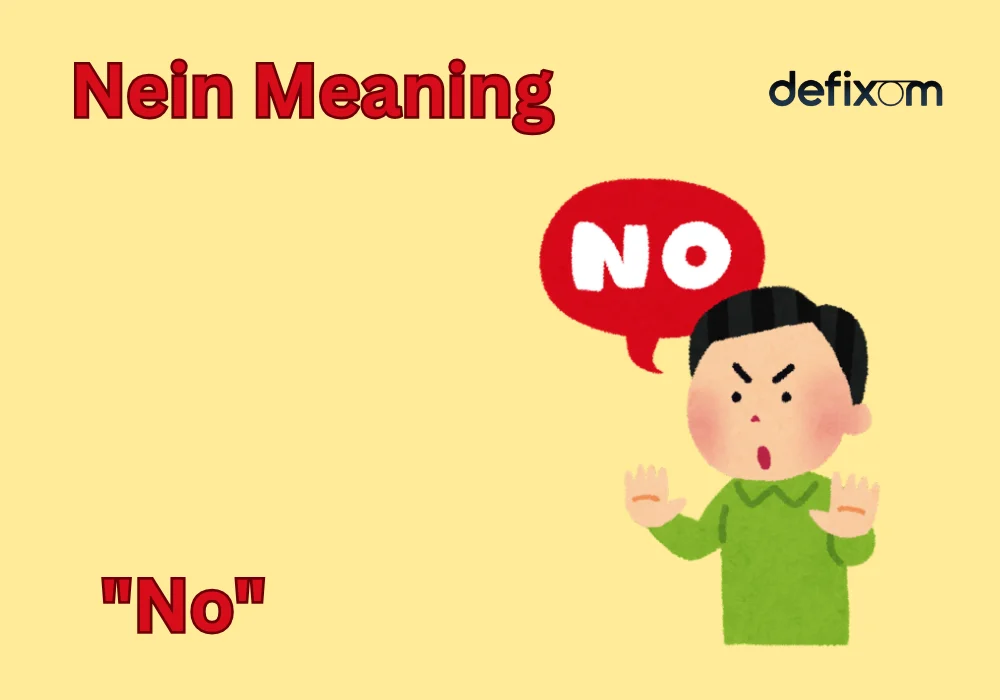
Nein is the German word for “no.” It’s a direct, simple negation and is used in the same way English speakers use “no” in everyday conversation.
- Origin: German language
- Pronunciation: /naɪn/ (sounds like “nine”)
- Literal Meaning: “No” or “not”
However, in English-speaking online communities, “nein” has taken on a playful, meme-like usage. People often use it for humor, exaggeration, or to make a simple “no” feel dramatic. For example, instead of replying with “no” in a chat, someone might say “nein!” to mimic a stern German accent, often referencing pop culture or internet memes.
Fun fact: The popularity of “nein” in memes surged from shows, movies, and gaming communities, where dramatic German exclamations are used for comedic effect. Think of a strict “Nein!” scene in a movie—it’s funny, relatable, and perfect for online chats.
Nein Meaning Number
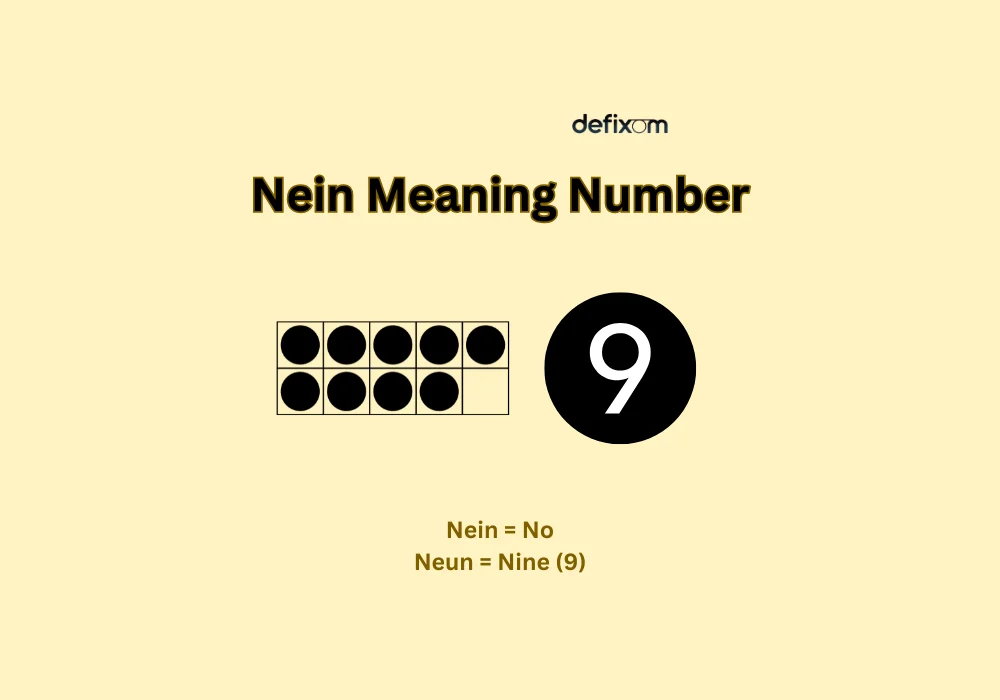
Nein does not mean a number in English. It is the German word for “No.” However, some people confuse it with the German number “neun,” which means “nine.”
Examples:
- Nein = No
- Neun = Nine (9)
Because the two words sound somewhat similar to non-German speakers, they are often mixed up. If you’re referring to the number 9 in German, the correct word is neun, not nein.
Nein Meaning Slang
In internet slang and memes, “Nein” is often used humorously to say “No” in a dramatic or exaggerated way. The word comes directly from German but has become popular online through memes, gaming communities, and social media.
Examples:
- “Can I have your fries?”
- “Nein!”
- “Did you finish the assignment?”
- “Nein 😂”
In slang usage, Nein usually means:
- No
- Absolutely not
- Definitely not
The exact tone depends on the context and can range from serious to playful.
Nein Pronunciation
The German word “Nein” is pronounced like:
Nein (nine)
For English speakers, it sounds very similar to the English word “nine.”
Pronunciation tips:
- The “ei” combination in German usually sounds like “eye” or “igh.”
- The word rhymes with “mine,” “fine,” and “nine.”
Example:
- Nein, danke. → “No, thank you.”
- Nein, das stimmt nicht. → “No, that is not correct.”
How to Use “Nein” in Texts or Chat
Using nein correctly depends on context. Here’s a breakdown:
1. Casual Denial
Simply saying no in a fun or dramatic way.
Example:
- Friend: “Can you give me your last slice of pizza?”
- You: “Nein! That’s mine 😤”
2. Dramatic or Comedic Effect
Used to exaggerate refusal, often mimicking German stereotypes in a humorous way.
Example:
- Friend: “Are you joining the group project at midnight?”
- You: “Nein! I have a life!”
3. Meme or Pop Culture Reference
Common in gaming, Discord, TikTok, or Reddit communities. It can reference memes, movies, or German-themed humor.
Example:
- Online meme: Picture of a cat in a Nazi uniform captioned: “Nein! You may not enter the room!”
Pro tip: Don’t use it in serious or professional conversations—its playful tone is best reserved for informal chats.
Examples of “Nein” in Conversations
Here are a few real-life scenarios to help you understand how nein fits into modern texting culture:
- Between Friends
- Friend: “Can I borrow your hoodie?”
- You: “Nein, it’s my lucky hoodie 😎”
- In Gaming Chats
- Teammate: “Let’s rush mid!”
- You: “Nein! We wait for the sniper!”
- In Memes or Online Communities
- TikTok comment: “Me when my mom asks if I cleaned my room: NEIN!”
- Playful Drama
- Sibling: “Can I have your dessert?”
- You: “Nein! Dessert is life!”
Common Mistakes or Misunderstandings
Even though nein is simple, people often misuse it online. Here’s what to watch out for:
- Confusing pronunciation with “nine”: While it sounds like “nine,” context matters; it’s always a negation.
- Overuse in professional chats: It’s playful, so using nein at work may come off as unprofessional.
- Mixing up with “ni” or “nee”: These are not correct in German; stick with nein for clarity.
- Literal translation pitfalls: Some think adding “nein” in English automatically sounds funny—context is key for the meme effect.
Related Slangs or Abbreviations
If you like nein, you might also enjoy these chat-friendly slangs:
- Ja: German for “yes,” often used for humor in memes.
- Bruh: Expressing disbelief or frustration.
- F: Paying respects or acknowledging failure in a funny way.
- Nope: Casual, informal way to say no in English.
- LOL / LMAO: To express laughter in response to dramatic nein memes.
Tip: Combining nein with emojis like 😤, 😹, or 💀 makes your messages more engaging and relatable.
Why “Nein” Is Still Trending in 2026
Even as chat culture evolves, nein remains popular because:
- It’s short, punchy, and universal across internet communities.
- Works perfectly for meme culture and dramatic humor.
- Fits gaming, TikTok, Discord, Reddit, and other social platforms seamlessly.
Updated for 2026: Recent trends show German-inspired memes and reactions growing in popularity on TikTok and Discord servers. Young users love mixing real German words like nein with exaggerated reactions for comedic effect.
Conclusion
Understanding nein meaning isn’t just about knowing it translates to “no.” It’s about embracing its playful, dramatic, and meme-worthy usage in modern digital conversations. Whether you’re replying to a friend, sharing a meme, or making a funny TikTok comment, nein adds personality and humor to your texts.
Remember these key points:
- Nein = No in German, but playful online.
- Use it in informal chats, memes, and gaming communities.
- Pair it with emojis or exaggeration for maximum impact.

I am a curious writer at Defixom who loves breaking down words, meanings, and ideas into simple, easy-to-understand explanations. My goal is to help readers quickly find clear answers without confusion, using clean language and real human insight.