In today’s fast-moving digital world, abbreviations and slang dominate how we communicate online. If you’ve ever come across “AFAIK Meaning” in a text message, social media comment, or online forum and wondered what it means—you’re not alone.
Understanding abbreviations like AFAIK Meaning is essential for keeping up with modern chat culture. Whether you’re texting friends, browsing Reddit, or replying on platforms like WhatsApp or Instagram, knowing what this term means can help you communicate clearly and avoid confusion.
This guide breaks down everything you need to know about AFAIK meaning, including how to use it, examples, mistakes to avoid, and related slang—all updated for 2026.
What Does AFAIK Mean? (Definition & Origin)
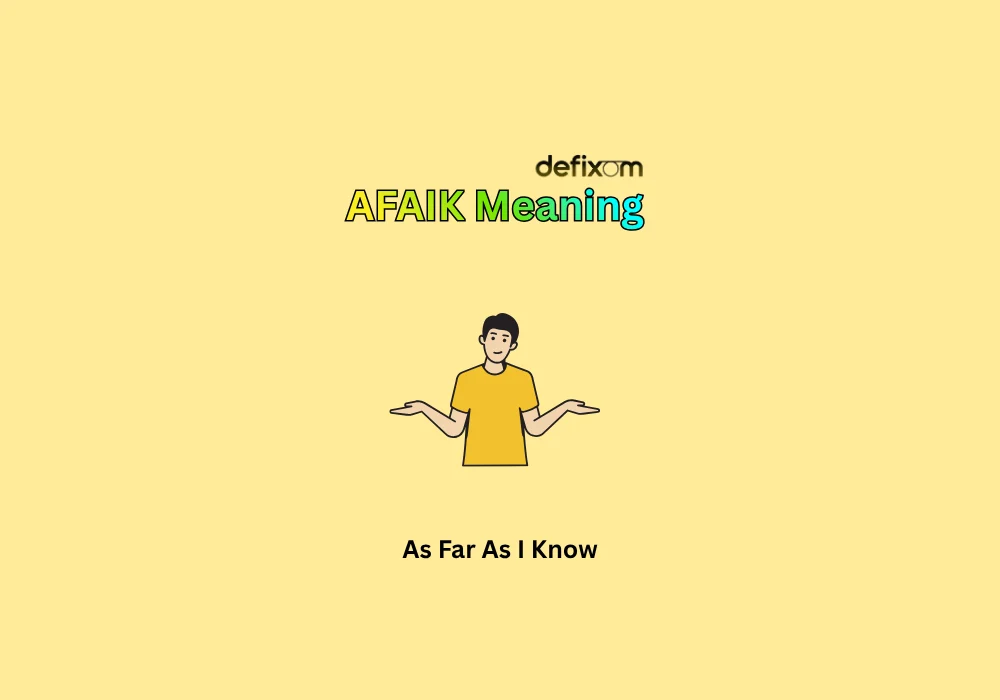
AFAIK stands for:
“As Far As I Know”
It’s used to express that the information you’re sharing is based on your current knowledge—but you’re not 100% certain.
Simple Explanation
When someone says AFAIK, they are basically saying:
- “This is what I believe is true”
- “I’m not completely sure, but this is what I know”
Origin of AFAIK
The abbreviation AFAIK dates back to early internet chatrooms and forums in the late 1990s and early 2000s. It became popular on platforms like:
- IRC (Internet Relay Chat)
- Early message boards
- Email communication
Fast forward to 2026, and it’s still widely used across:
- Social media (Twitter/X, Instagram)
- Messaging apps (WhatsApp, Messenger)
- Online communities (Reddit, Discord)
How to Use AFAIK in Texts or Chat
Using AFAIK is simple, but understanding the tone is key. It’s often used to soften statements and avoid sounding overly confident.
When to Use AFAIK
Use AFAIK when:
- You’re not completely sure about something
- You want to avoid giving wrong information
- You’re sharing general knowledge, not facts
Basic Structure
You can place AFAIK at the beginning, middle, or end of a sentence.
Examples:
- Beginning:
AFAIK, the meeting is still scheduled for tomorrow. - Middle:
The event is, AFAIK, happening next week. - End:
He moved to Canada, AFAIK.
Tone & Context
Using AFAIK makes your message:
- Sound more polite
- Less assertive
- More honest
It’s especially useful in professional chats or group discussions where accuracy matters.
Examples of AFAIK in Conversations
Let’s look at some real-life and relatable examples to see how AFAIK is used in everyday conversations.
1. Casual Texting
Friend 1: “Is Sarah coming tonight?”
Friend 2: “AFAIK, she said yes.”
2. Social Media Comment
“AFAIK, this feature hasn’t been released globally yet.”
3. Work or Study Chat
“AFAIK, the deadline is Friday, but you might want to double-check.”
4. Gaming Chat
“AFAIK, that weapon is still the strongest in the game.”
5. Funny/Relatable Scenario
You: “Did I leave my charger at your place?”
Friend: “AFAIK, yes… unless it magically walked away 😄”
Common Mistakes or Misunderstandings
Even though AFAIK is simple, people often misuse or misunderstand it.
1. Using It When You’re Certain
❌ AFAIK, 2+2 = 4
✔ 2+2 = 4 (No need for AFAIK here)
👉 Don’t use AFAIK for facts you are completely sure about.
2. Confusing It With Similar Slang
Some people mix up AFAIK with other abbreviations like:
- IMO (In My Opinion)
- IIRC (If I Recall Correctly)
👉 While similar, each has a slightly different meaning.
3. Overusing It
Using AFAIK in every sentence can make you sound unsure or lacking confidence.
❌ AFAIK, this is good. AFAIK, we should try it. AFAIK, it works.
✔ Use it only when necessary.
4. Misinterpreting Tone
Some readers may think you’re unsure or uninformed. So use it carefully in:
- Professional emails
- Academic discussions
Related Slangs or Abbreviations
If you’re learning AFAIK, you’ll likely come across these similar internet slang terms:
Common Alternatives
- IMO – In My Opinion
- IMHO – In My Humble Opinion
- IIRC – If I Recall Correctly
- TBH – To Be Honest
- IDK – I Don’t Know
When to Use Each
- Use AFAIK → When you’re mostly sure but not 100%
- Use IDK → When you have no idea
- Use IMO → When you’re sharing an opinion
Where Is AFAIK Commonly Used?
In 2026, AFAIK is still relevant and widely used across multiple platforms:
1. Messaging Apps
- Facebook Messenger
- Telegram
2. Social Media
- Instagram comments
- Twitter/X replies
- TikTok captions
3. Online Forums
- Reddit threads
- Quora answers
- Discord chats
4. Workplace Communication
- Slack messages
- Informal emails
👉 It’s especially popular in informal and semi-formal communication.
Why AFAIK Still Matters in 2026
Even with newer slang constantly emerging, AFAIK remains popular because:
- It promotes honest communication
- Helps avoid spreading misinformation
- Fits perfectly in quick, casual messaging
In an era where misinformation spreads fast, adding “AFAIK” shows responsibility and awareness.
Pro Tips for Using AFAIK Like a Pro
Want to sound natural and confident? Keep these tips in mind:
- ✔ Use it when sharing uncertain info
- ✔ Pair it with polite language
- ✔ Avoid in formal documents
- ✔ Don’t overuse it
- ✔ Combine with context for clarity
Example (Better Usage):
“AFAIK, the update will roll out next week, but the company hasn’t confirmed it yet.”
Internal Linking Suggestions (For SEO Boost)
If you’re publishing this article, consider linking to related posts like:
- “IMO Meaning in Text”
- “IDK Meaning Explained”
- “Top Internet Slang Words in 2026”
- “What Does TBH Mean?”
This improves SEO and keeps users engaged longer.
Conclusion:
To sum it up, AFAIK means “As Far As I Know” and is used when you’re sharing information you’re not completely certain about. It’s a small phrase with a big role in modern communication—helping people sound more honest, polite, and realistic in conversations.
In texting, social media, and online discussions, using AFAIK correctly can prevent misunderstandings and make your communication clearer. Just remember not to overuse it or rely on it when stating absolute facts.
As digital language continues to evolve in 2026, abbreviations like AFAIK prove that clarity and honesty still matter—even in the shortest messages.

I am a curious writer at Defixom who loves breaking down words, meanings, and ideas into simple, easy-to-understand explanations. My goal is to help readers quickly find clear answers without confusion, using clean language and real human insight.