In the fast-paced world of texting, social media, and online chats, abbreviations and symbols are everywhere. One of the symbols you might see often is “(y) meaning”.
But what does it mean? And why is it still so popular even as language evolves online?
Whether you’re texting friends, posting on social media, or chatting in forums, understanding this simple yet meaningful symbol can help you communicate more naturally and avoid misunderstandings.
Let’s break down everything about “(y)”, from its meaning and origin to practical examples and common mistakes—updated for 2026.
What Does “(y)” Mean? (Definition & Origin)
Definition
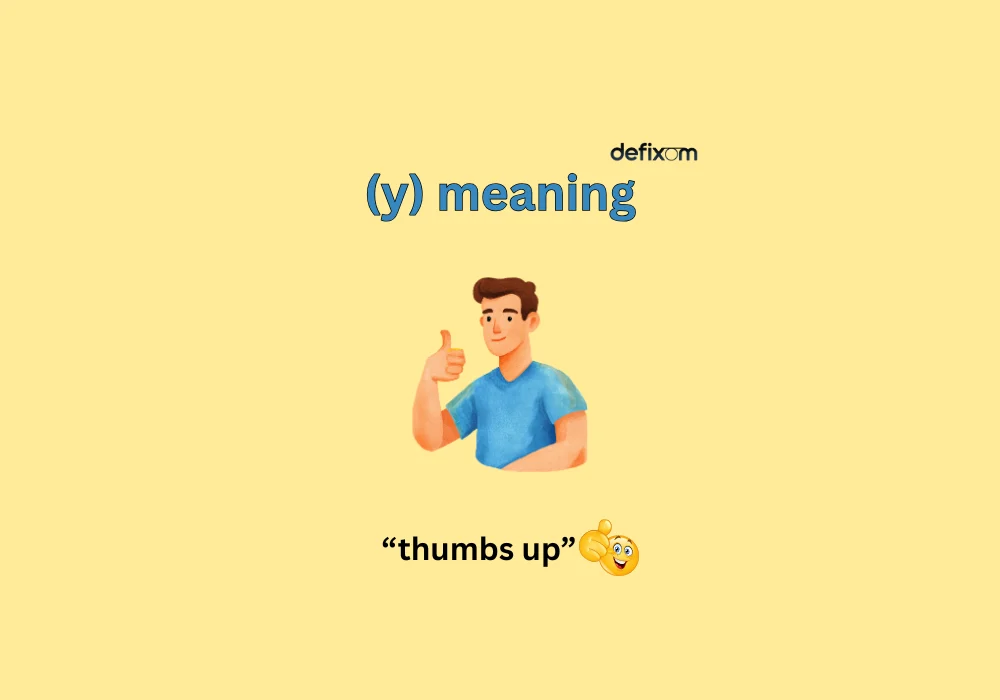
In texting and chat culture, “(y)” is a symbol used to represent a “thumbs up” or approval. Essentially, it’s the digital equivalent of saying:
- “Good job!”
- “I agree!”
- “Liked it!”
- “Sounds good 👍”
It’s a shorthand way to react positively to a message without typing a full response.
Origin
The symbol “(y)” comes from older internet chat platforms like Orkut, early Facebook, MSN Messenger, and BBM (BlackBerry Messenger). In these platforms, special symbols like (y) were used to denote emoticons or gestures.
- (y) = Thumbs up
- (n) = Thumbs down
Over time, it became popular as a quick way to express approval, especially in chats where emojis weren’t available.
How to Use “(y) meaning” in Texts or Chat
Using “(y)” is simple, but context matters. Here’s how to use it effectively:
- In response to good news
- Friend: “I aced my exam today!”
- You: “Congrats! (y)”
- To agree with someone
- Colleague: “Let’s meet at 3 PM instead of 4.”
- You: “Perfect (y)”
- As a casual acknowledgment
- Friend: “I’ll pick up pizza on my way.”
- You: “(y)”
Pro Tip: While (y) is widely understood, in professional or formal communication, it’s better to use actual words or emojis.
Examples of “(y)” in Conversations
Here are some relatable scenarios showing how (y) is used in real-life texting:
1 Example : Social Chat
- Alex: “I just got tickets to the concert 🎉”
- Jamie: “Awesome! (y)”
2 Example : Forum or Online Group
- User1: “I tried this new game feature and it’s amazing!”
- User2: “Totally agree (y)”
3 Example : Casual Texting
- Friend: “I finished the assignment early.”
- You: “Great job (y)”
Notice how (y) can replace lengthy replies while still showing positivity.
Common Mistakes or Misunderstandings
While (y) is simple, it can cause confusion if used incorrectly:
- Overusing it: Sending (y) in every reply can seem lazy. Balance it with actual words.
- Wrong context: Don’t use (y) sarcastically in serious conversations—it might offend.
- Assuming everyone knows it: Some users unfamiliar with older chat symbols may not understand it. In such cases, pairing (y) with a thumbs-up emoji 👍 helps.
Related Slangs or Abbreviations
If you like using (y), you might also see or want to use these related shortcuts:
- (n) – Thumbs down or disagreement
- lol – Laugh out loud
- brb – Be right back
- gg – Good game
- 👍 – Classic thumbs up emoji
- 👌 – Okay or approval symbol
These abbreviations and symbols help you communicate quickly without typing full sentences, keeping chats light and fun.
Why “(y)” Still Matters in 2026
Even though modern messaging apps have rich emoji libraries, (y) continues to be used because:
- It’s fast: One symbol conveys approval instantly.
- It’s lightweight: Works on all devices, even older phones.
- It’s nostalgic: Users from early social media platforms feel a connection.
In 2026, you might see (y) in Facebook comments, WhatsApp groups, Telegram chats, or gaming forums. It’s a small gesture, but it carries a friendly, positive vibe that transcends language barriers.
Quick Tips to Use “(y)” Like a Pro
- Pair it with words for clarity:
(y) Good idea! - Avoid in formal communication: Use emojis or words instead.
- Know your audience: Younger users may prefer 👍, older users might appreciate
(y)for nostalgia. - Combine with other symbols:
(y) (y)can emphasize double approval in informal chats.
Conclusion
The “(y)” symbol may be small, but it’s powerful. It’s a thumbs-up, a nod of approval, and a quick way to show positivity in digital conversations. Understanding its meaning, origin, and correct usage can help you communicate more efficiently while avoiding misunderstandings.
As texting culture continues to evolve, small symbols like (y) remind us that sometimes, less is more. They carry history, nostalgia, and universal meaning, all in a tiny package.
So next time your friend shares exciting news or a clever idea, don’t forget to give them a simple (y)—a gesture that says, “I like it!”

I am a curious writer at Defixom who loves breaking down words, meanings, and ideas into simple, easy-to-understand explanations. My goal is to help readers quickly find clear answers without confusion, using clean language and real human insight.