In today’s fast-moving digital world, words often carry different meanings depending on context—especially in texting, social media, and online conversations. One word that frequently appears in both formal language and casual chats is “vow.”
Understanding the vow meaning helps you avoid confusion, interpret emotional messages correctly, and even use the word more effectively in your own texts. Whether you’ve seen it in a romantic message, a serious promise, or a dramatic tweet, this guide breaks it all down for you.
This article explains the meaning of vow in simple terms, with modern examples, texting usage, common mistakes, and related slang—so you can confidently understand and use it in real-life conversations.
What Does “Vow” Mean? (Definition & Origin)
Basic Definition of Vow
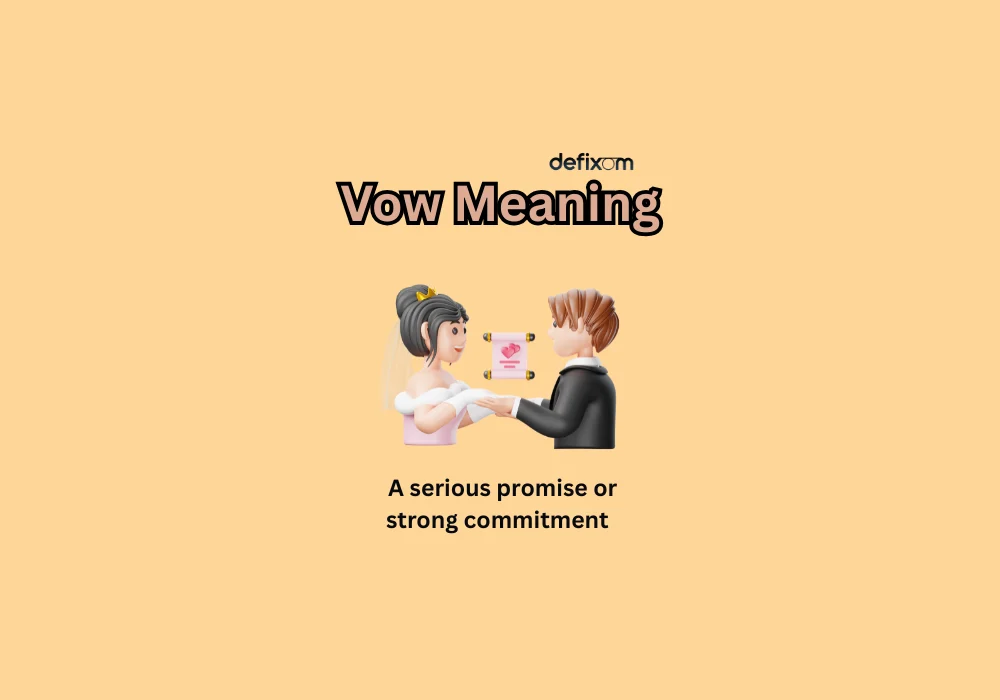
The word vow means a serious promise or strong commitment to do (or not do) something. Unlike a casual promise, a vow often carries emotional, moral, or personal weight.
Vow meaning in simple words:
A vow is a deep, heartfelt promise that someone truly intends to keep.
Origin of the Word “Vow”
The term vow comes from the Latin word votum, meaning a promise or dedication. Historically, vows were connected to religion, marriage, and lifelong commitments—and that seriousness still influences how the word is used today.
Vow Meaning in Modern Texting and Chat
In texting and online chat, vow is often used to express strong emotion, sincerity, or determination. It’s less casual than “promise” and is usually used when someone wants their words to feel extra meaningful.
How “Vow” Is Used Digitally
In modern communication, people use vow to:
- Emphasize honesty
- Show emotional intensity
- Make dramatic or heartfelt commitments
- Add seriousness to a message
📱 Common platforms where “vow” appears:
- Text messages
- Instagram captions
- Twitter/X posts
- Reddit discussions
- Relationship chats
- Motivational quotes
How to Use “Vow” in Texts or Chat
Using vow correctly depends on tone and context. Because it’s a strong word, it works best when the situation actually calls for seriousness.
Correct Ways to Use “Vow”
You can use vow when:
- Making a heartfelt promise
- Talking about love or loyalty
- Expressing determination or change
- Adding drama or emotional emphasis (sometimes humorously)
Examples of Natural Usage
- “I vow I’ll always be there for you.”
- “After this year, I vow to focus on my mental health.”
- “I vow never to trust that restaurant again 😭.”
💡 Pro tip: In casual chats, vow is often used half-seriously or humorously, but the emotional tone is still clear.
Examples of “Vow” in Real Conversations
Here are realistic, modern examples showing how vow is used in everyday texting and online chats:
1. Romantic Context
Person A: “Distance is hard, but I vow we’ll make it.”
Person B: “That means everything to me ❤️.”
➡️ Shows love, loyalty, and emotional commitment.
2. Self-Improvement or Motivation
Text: “New year, new mindset. I vow to stop procrastinating.”
➡️ Common in 2026 goal-setting posts and captions.
3. Dramatic or Funny Use
Chat: “I vow to never watch that show again—it ruined me.”
➡️ Adds humor while keeping a dramatic tone.
4. Serious Promise
Message: “I vow this won’t happen again. You have my word.”
➡️ Stronger than saying “I promise.”
Vow vs Promise: What’s the Difference?
Many people confuse vow and promise, but they’re not exactly the same.
| Word | Meaning | Emotional Weight |
|---|---|---|
| Promise | A general commitment | Medium |
| Vow | A deep, serious pledge | High |
📌 Key difference:
A vow feels more permanent and emotional, while a promise can be casual.
Common Mistakes or Misunderstandings
Even though vow is simple, it’s often misused—especially in casual texting.
1 Mistake : Using “Vow” Too Casually
❌ “I vow I’ll reply in 2 minutes.”
✔️ Better: “I promise I’ll reply soon.”
➡️ Vow sounds too intense for small things.
2 Mistake : Confusing It with Oaths
A vow is personal, while an oath is usually legal or formal.
- Vow → Emotional or personal
- Oath → Legal, official, or sworn
3 Mistake : Assuming It’s Only Religious
While vows are common in weddings and religion, modern usage is much broader, especially in digital conversations.
Related Slangs or Abbreviations Similar to “Vow”
While vow itself isn’t an abbreviation, it’s often used alongside modern slang that expresses commitment or honesty.
Popular Related Terms
- FR – For real
- No cap – Not lying
- On God – Swearing honesty
- Bet – Agreement or commitment
- I swear – Casual version of vow
- Promise fr – Emphasizing sincerity
Example Combo Usage
- “I vow, no cap, I’m telling the truth.”
- “On God, I vow I’ll fix this.”
When Should You Use “Vow” in 2026?
In 2026, people value authenticity and emotional clarity more than ever. Using vow can make your message stand out—when used correctly.
Best Situations to Use “Vow”
- Emotional conversations
- Apologies that need sincerity
- Relationship talks
- Public commitments or goals
- Motivational or reflective posts
Situations to Avoid
- Casual scheduling
- Jokes that don’t need seriousness
- Professional emails (unless formal)
Vow Meaning on Social Media
On platforms like Instagram, TikTok, and X (Twitter), vow is often used for dramatic effect or self-growth narratives.
Trending 2025 Caption Examples
- “I vow to protect my peace this year.”
- “This is my glow-up vow.”
- “I vow to choose myself, finally.”
➡️ These posts resonate because vow signals intentional change.
Is “Vow” Still Relevant in Modern Slang?
Yes—while it’s not slang in the traditional sense, vow remains powerful in modern language because it:
- Sounds sincere
- Feels emotional
- Adds weight to statements
In an age of short texts and abbreviations, vow stands out by slowing things down and adding meaning.
Conclusion:
The meaning of vow goes far beyond a simple promise. In texts, chats, and modern online language, it represents commitment, sincerity, and emotional depth.
Whether you’re expressing love, making a serious promise, or adding dramatic emphasis, vow helps your message feel more powerful.
As communication continues to evolve in 2026, understanding words like vow ensures you read between the lines and communicate more effectively yourself. Used thoughtfully, it can strengthen relationships, clarify intentions, and make your words truly count.

I am a curious writer at Defixom who loves breaking down words, meanings, and ideas into simple, easy-to-understand explanations. My goal is to help readers quickly find clear answers without confusion, using clean language and real human insight.