What “Vale” Really Means, How to Use It, and Why You’ll See It Online More Often
In today’s global texting culture, words don’t stay locked inside one language anymore. You might be chatting on WhatsApp, scrolling through Instagram comments, or gaming online when someone suddenly replies with “vale.” If you’ve ever paused and thought, “Wait… what does vale mean in text?” — you’re not alone.
Understanding the vale meaning is important because it’s a perfect example of how multilingual slang has blended into modern digital communication. In 2026, texting and chat language is more international than ever, and “vale” is one of those short, context-based words that can mean different things depending on how and where it’s used.
This guide is fully updated for 2026 and breaks down everything you need to know about vale meaning in chat, text messages, and online conversations—in a simple, human, and practical way.
What Does “Vale” Mean? (Definition & Origin)
Basic Definition of Vale
In most texting and chat contexts, vale means:
- “Okay”
- “Alright”
- “Got it”
- “Sounds good”
It’s often used as a short confirmation or agreement—similar to OK, k, or sure.
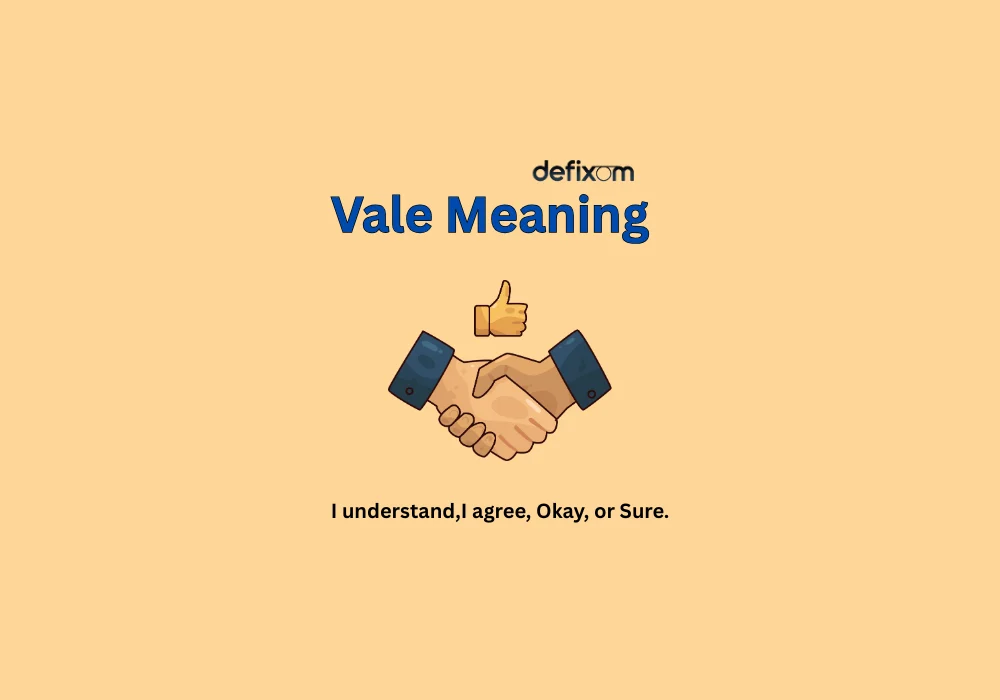
✅ Vale = I understand / I agree / That works
Origin of the Word “Vale”
The word vale comes from Latin, where it originally meant “be well” or “farewell.” Over time, it evolved in modern Romance languages:
- Spanish: “vale” = okay / agreed
- Italian: “vale” = it’s worth / okay (context-based)
- Portuguese: informal confirmation
- Latin: goodbye or farewell
Because so many people chat across languages online, vale naturally crossed into texting culture, especially in international chats, gaming, and social media.
Vale Meaning in Text (Modern Usage)
In texting and chat slang, vale is most commonly used to:
- Confirm plans
- Agree with a message
- End a conversation politely
- Respond quickly without sounding cold
Example:
“I’ll send the file tonight.”
“Vale 👍”
How to Use “Vale” in Texts or Chat
When “Vale” Works Perfectly
You can safely use vale in casual, informal conversations, especially when:
- Messaging friends
- Chatting in group chats
- Talking with multilingual users
- Responding quickly on WhatsApp, Telegram, or Instagram
Common situations include:
- Confirming plans
- Acknowledging instructions
- Agreeing without adding extra words
How “Vale” Sounds in Conversation
Tone matters in texting. Vale usually feels:
- Relaxed
- Friendly
- Neutral
- Slightly informal
It’s not rude, but it can sound short if overused without emojis or context.
Examples of Correct Usage
- “Meet at 8 PM?”
Vale! - “Please don’t forget to tag me.”
Vale, noted. - “Let’s continue tomorrow.”
Vale 😊
Adding emojis softens the tone and makes it feel more friendly.
Examples of “Vale” in Real Conversations
1. Casual Friend Chat
Alex: I’ll pick you up after work
You: Vale 👍
Simple, clear, and efficient.
2. Group Chat Planning
Group Admin: Everyone be online by 9
Member: Vale
This confirms you’ve seen and accepted the message.
3. Social Media Comments
Comment: DM me the details
Reply: Vale, will do
A polite, modern response.
4. Gaming or Online Communities
Teammate: Cover the left side
You: Vale
Quick confirmation without slowing gameplay.
Common Mistakes or Misunderstandings
1. Thinking “Vale” Always Means Goodbye
While vale can mean goodbye in Latin or formal contexts, in texting it rarely does.
❌ Misunderstanding:
“Vale” = bye
✅ Reality:
In chat, it usually means okay
2. Using “Vale” in Very Formal Writing
Avoid using vale in:
- Professional emails
- Academic writing
- Business proposals
It’s best for casual digital communication, not official messages.
3. Assuming Everyone Knows It
Not all English-only speakers understand vale. If clarity is important, use:
- OK
- Sure
- Got it
Vale vs Similar Text Abbreviations
1 Vale vs OK
| Term | Tone | Usage |
|---|---|---|
| Vale | Casual, international | Chats, DMs |
| OK | Neutral, universal | Any context |
2 Vale vs K
- K can feel cold or passive-aggressive
- Vale feels more friendly and natural
3 Vale vs Sure
- Sure implies willingness
- Vale implies agreement or acknowledgment
Related Slangs and Abbreviations
If you understand vale, you’ll also see these often:
- OK / Okie – agreement
- K – short confirmation
- Bet – agreement (Gen Z slang)
- Aight – informal “alright”
- Roger – understood
- Copy – message received
Where Is “Vale” Commonly Used in 2026?
In 2026, vale is especially common on:
- Telegram
- Instagram DMs
- Discord servers
- Online games
- International group chats
Thanks to global communication, language mixing is now normal, and words like vale feel natural even in English chats.
Is “Vale” Rude or Polite?
Short answer: Vale is polite—but minimal.
It’s not rude, but it can feel brief. If you want warmth, add:
- Emojis 😊
- Extra words (“vale, thanks”)
Why “Vale” Is Trending in Texting Culture
1. Short and Efficient
Texting favors speed. Vale is quick and clear.
2. Global Influence
Multilingual users bring their native words into English chats.
3. Feels More Human Than “K”
Many people prefer vale because it sounds less dismissive.
Vale Meaning in One Line (Quick Summary)
Vale in text means “okay,” “agreed,” or “got it,” and is commonly used in casual chats to confirm or acknowledge messages.
Final Thoughts:
To sum it up, vale meaning in text is simple but powerful. It’s a short, friendly way to show agreement or understanding, especially in today’s international chat culture. While it comes from Latin and Romance languages, its modern usage is casual, practical, and widely accepted online.
As texting continues to evolve in 2026 words like vale remind us that digital language is global, flexible, and constantly changing. Knowing these small slang terms helps you communicate more naturally—and avoid awkward misunderstandings.
Now that you know the meaning, you can confidently use vale in chats, DMs, and group conversations without second-guessing yourself.

I am the voice behind Defixom, a site dedicated to explaining meanings in a clear and simple way. I love turning confusing words into easy explanations so anyone can understand them in seconds. My goal is to make learning meanings fast, friendly, and stress-free.