Understanding unusual or unfamiliar terms like neap tide has become more important than ever. With educational reels, science TikToks, weather updates, and even casual chats referencing ocean phenomena, people often encounter words outside everyday slang.
Whether you saw it in a geography lesson, a social media post, or a casual chat, knowing the neap tide meaning helps you stay informed, confident, and in-the-know in modern digital conversations.
This guide is fully updated for 2026, written in simple language, and designed to explain the term clearly—without sounding like a boring textbook. 🌊
What Does Neap Tide Mean? (Definition & Origin)
Neap Tide Meaning (Simple Definition)
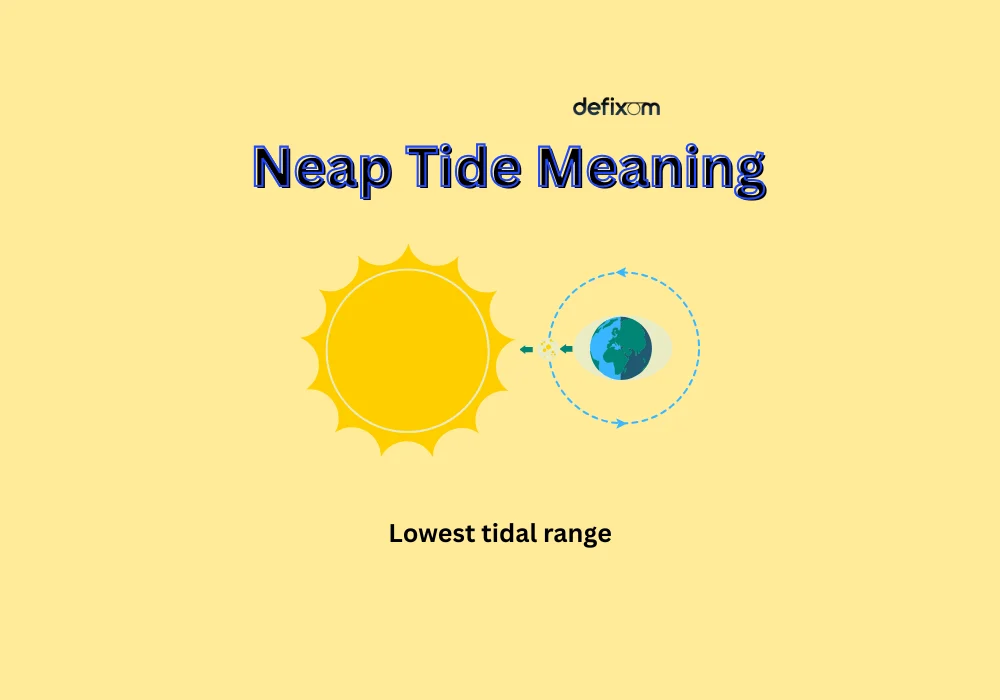
A neap tide is a type of tide where the difference between high tide and low tide is smaller than usual. In simple terms, the ocean doesn’t rise or fall as dramatically during a neap tide.
👉 This means:
- High tides are lower
- Low tides are higher
- Water levels stay more even
Neap tides happen twice a month and are a normal part of Earth’s tidal cycle.
Origin of the Term “Neap Tide”
The word “neap” comes from the Old English word nep, meaning “without power” or “lacking strength.” That fits perfectly, because neap tides are the weakest tides compared to others.
Unlike slang terms that evolve quickly, neap tide is a centuries-old scientific term that has remained relevant—especially in climate discussions, education, and marine content online.
Why Do Neap Tides Happen? (The Science Made Easy)
The Role of the Moon and Sun
Neap tides occur when the Sun and Moon pull on Earth’s oceans at right angles to each other.
This happens during:
- First quarter moon
- Third (last) quarter moon
Because their gravitational forces partially cancel each other out, the ocean experiences less movement.
Neap Tide vs Spring Tide (Quick Comparison)
Many people confuse neap tides with spring tides, so here’s a clear breakdown:
| Feature | Neap Tide | Spring Tide |
|---|---|---|
| Tidal Range | Small | Large |
| Moon Phase | Quarter moons | New & full moons |
| Water Movement | Weaker | Stronger |
| Occurs | Twice a month | Twice a month |
💡 Important: Spring tides have nothing to do with the season of spring. That’s a common misunderstanding!
How to Use “Neap Tide” in Texts or Chat
Even though neap tide isn’t traditional internet slang, it’s increasingly used in:
- Educational chats
- Social media captions
- Weather updates
- Science memes
- Documentary discussions
Common Contexts Where Neap Tide Is Used
- 🌊 Weather & ocean updates
- 📚 School or college discussions
- 📱 Educational TikToks or reels
- 🌍 Climate change conversations
- 🚤 Fishing and boating communities
Using “Neap Tide” Casually in a Sentence
You don’t have to sound overly technical. Here are some natural, human-style uses:
- “The waves are calm today—it’s probably a neap tide.”
- “Fishing’s slower this week because of the neap tide.”
- “This beach looks so different during a neap tide.”
Examples of Neap Tide in Conversations
1 Example : Casual Chat
Alex: Why is the sea so calm today?
Sam: It’s a neap tide—less water movement this week.
2 Example : Social Media Caption
“Low waves, peaceful vibes 🌊 Must be a neap tide kind of day.”
3 Example : Educational Group Chat
Student: What causes smaller tides?
Teacher: That’s called a neap tide, when the sun and moon balance each other.
4 Example : Fishing Forum
“Anyone else noticing weaker currents? Classic neap tide conditions.”
These examples show how the term blends naturally into modern conversations without sounding stiff or outdated.
Common Mistakes or Misunderstandings About Neap Tide
Even though the concept is simple, people often get it wrong. Let’s clear things up.
1 Mistake : Thinking Neap Tide Means No Tide
❌ Wrong
✅ There are still tides—just smaller ones
2 Mistake : Confusing Neap Tide With Spring Tide
- Neap tide = weaker tides
- Spring tide = stronger tides
They’re opposites but part of the same cycle.
3 Mistake : Assuming It’s Rare
Neap tides are very common and happen twice every lunar month.
4 Mistake : Believing It’s a Slang Term
While it appears online more often now, neap tide is a scientific term, not slang—though it’s used casually in digital spaces.
Why Neap Tides Matter in Real Life
1. Coastal Living
People living near coasts rely on neap tide predictions for:
- Dock access
- Shoreline activities
- Flood planning
2. Fishing and Boating
Fishermen often track neap tides because:
- Fish behavior changes
- Water currents are calmer
- Navigation is easier
3. Environmental & Climate Awareness
Neap tides are frequently discussed in:
- Climate education
- Marine biology
- Environmental documentaries
Related Terms and Abbreviations You Should Know
If you’re learning about neap tide, these related terms often appear alongside it:
- Spring Tide – The strongest tides of the month
- High Tide – Maximum water level
- Low Tide – Minimum water level
- Tidal Range – Difference between high and low tide
- Lunar Cycle – The moon’s repeating phases
Is Neap Tide Used in Modern Digital Content? (2026 Trend Insight)
Yes—especially in 2025–2026, neap tide has gained visibility thanks to:
- 🌊 Educational YouTube Shorts
- 📱 TikTok science creators
- 🌍 Climate-awareness posts
- 📚 Online learning communities
Many creators simplify the term for younger audiences, making neap tide meaning a trending educational search query rather than just a textbook definition.
How to Remember the Meaning Easily
Here’s a quick memory trick:
Neap = Not Extreme
If tides aren’t extreme, dramatic, or powerful—it’s likely a neap tide.
Quick Summary: Neap Tide Meaning
- Neap tide = smaller difference between high and low tides
- Happens during quarter moon phases
- Caused by balanced gravitational pull
- Occurs twice a month
- Commonly mentioned in science, weather, fishing, and online education
Conclusion:
Understanding the neap tide meaning helps you follow conversations about oceans, weather, and climate without confusion.
It’s no longer just a classroom term—it’s part of modern digital discussions, educational content, and real-life coastal planning.
In 2026, people value clear, accurate knowledge more than ever. Knowing what a neap tide is (and what it isn’t) gives you confidence—whether you’re chatting online, watching a science reel, or explaining it to someone else.

I am the voice behind Defixom, a site dedicated to explaining meanings in a clear and simple way. I love turning confusing words into easy explanations so anyone can understand them in seconds. My goal is to make learning meanings fast, friendly, and stress-free.