In today’s online world, serious psychological terms often appear in texts, social media posts, TikTok videos, Reddit threads, and therapy-related conversations. One phrase that’s increasingly searched and discussed is emotional incest.
Understanding the emotional incest meaning is important because the term is often misunderstood, misused, or casually thrown around in chats without knowing its real impact.
Unlike slang terms that are playful or humorous, this phrase describes a real emotional dynamic that can deeply affect relationships and mental health.
This guide explains the term clearly, simply, and responsibly—updated for 2026—so readers can understand what it actually means, how it’s used in conversations, and what it does not mean.
What Does Emotional Incest Mean? (Definition & Origin)
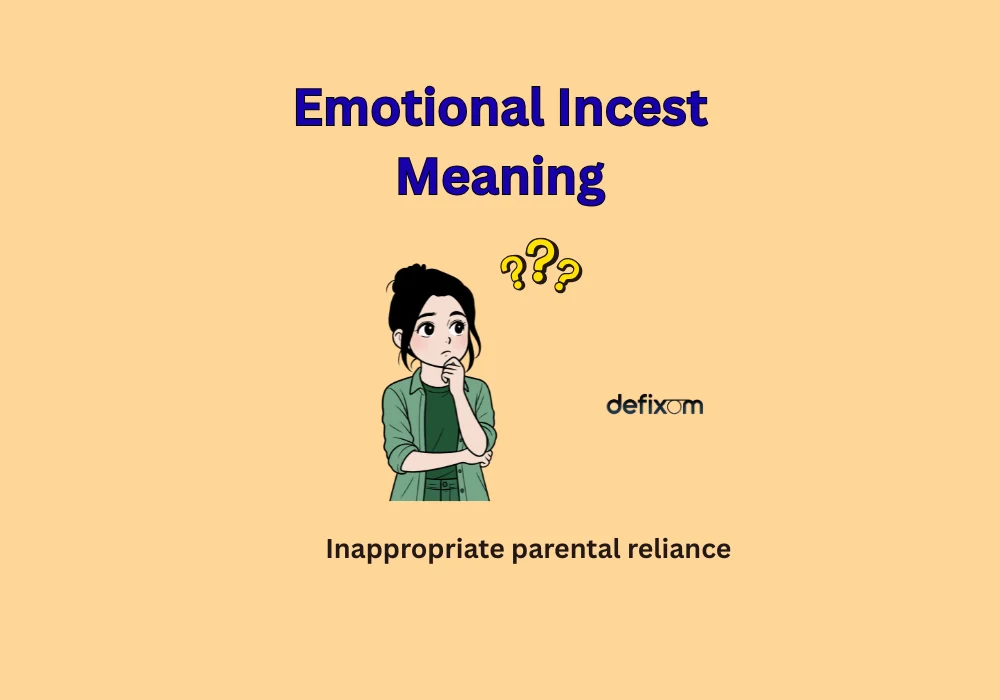
Emotional Incest Meaning (Simple Definition)
Emotional incest refers to a situation where a parent or caregiver relies on a child for emotional support that should come from an adult relationship.
There is no physical or sexual contact involved. Instead, the issue is emotional boundary crossing, where a child is treated like:
- A therapist
- A partner
- A best friend responsible for adult emotions
In short, the child becomes an emotional substitute for an adult relationship.
Important: Emotional incest is about emotional roles, not sexual behavior.
Origin of the Term
The term gained recognition in psychology and family therapy, often linked to concepts like:
- Enmeshment
- Parentification
- Boundary violations
Mental health professionals began using it to describe harmful emotional dynamics that don’t involve physical abuse but still cause long-term psychological effects.
How Emotional Incest Is Used in Modern Texts & Online Conversations
While emotional incest is not slang, it appears frequently in:
- Therapy TikTok
- Mental health Instagram posts
- Reddit relationship forums
- Group chats discussing family trauma
Common Contexts Where the Term Appears
- Personal healing stories
- Therapy discussions
- Relationship advice threads
- Mental health awareness posts
Example:
“I didn’t realize until therapy that I experienced emotional incest growing up.”
Signs of Emotional Incest (Explained Clearly)
Understanding the emotional incest meaning requires recognizing common patterns.
Typical Signs Include:
- A parent sharing adult problems (marriage, finances, loneliness)
- Expecting the child to “take sides” in conflicts
- Saying things like:
- “You’re the only one who understands me”
- “I don’t know what I’d do without you”
- Treating the child as an emotional confidant
- Guilt-tripping the child for wanting independence
💡 Key Insight: The child feels responsible for the parent’s happiness.
Examples of Emotional Incest in Conversations
Real-Life Style Examples
1 Example (Text Message):
“I don’t need anyone else. You’re all I have.”
2 Example (Casual Conversation):
“My mom used to tell me everything about her marriage. I thought it was normal—turns out it was emotional incest.”
3 Example (Online Post):
“Therapy taught me that being my parent’s emotional support system wasn’t love—it was emotional incest.”
These examples show how the term is used seriously, not jokingly.
What Emotional Incest Is NOT
This is where confusion often happens online.
Common Misunderstandings
❌ It does not mean:
- Sexual abuse
- Physical incest
- Romantic attraction
✔ It does mean:
- Emotional boundary violations
- Role reversal between parent and child
- Emotional dependence
Using the term incorrectly can minimize its seriousness, so accuracy matters.
Emotional Incest vs Parentification (Key Differences)
Many people confuse these two terms.
Emotional Incest
- Emotional reliance on a child
- Child meets emotional needs of parent
- Often involves guilt, closeness, and blurred boundaries
Parentification
- Child takes on adult responsibilities (caregiving, finances)
- More task-based than emotional
📝 Note: Both can happen together, but they’re not identical.
Why Emotional Incest Can Be Harmful
Children involved in emotional incest often grow up with:
- Difficulty setting boundaries
- People-pleasing behaviors
- Fear of independence
- Anxiety or emotional burnout
- Trouble in romantic relationships
Adult Impact
Many adults later say:
“I feel responsible for everyone’s emotions—and I don’t know why.”
That’s a common long-term effect of emotional incest.
Why the Term Is Trending in 2026
The emotional incest meaning is trending because:
- Therapy content is mainstream
- People are unpacking childhood trauma online
- Social media normalizes emotional awareness
- Younger generations prioritize boundaries
TikTok and Instagram creators now openly discuss family dynamics once considered “normal,” bringing this term into everyday conversations.
How to Use the Term Correctly in Writing or Speech
Correct Usage Tips
- Use it seriously, not casually
- Avoid joking or exaggerating
- Use it when discussing emotional boundaries
- Respect its psychological weight
Correct Example:
“My therapist explained that what I experienced was emotional incest.”
Incorrect Example:
“My mom texts me too much—emotional incest lol.”
Related Terms & Abbreviations (Internal Linking Ideas)
If you’re writing content or learning more, consider related topics:
- Enmeshment
- Parentification
- Trauma bonding
- Attachment styles
- Boundaries in relationships
- CPTSD meaning
- Gaslighting meaning
These terms often appear alongside emotional incest in mental health discussions.
Is Emotional Incest the Same as Emotional Abuse?
Not always.
- Emotional incest can be unintentional
- Many parents don’t realize they’re crossing boundaries
- Emotional abuse often involves control or manipulation
That said, emotional incest can still cause emotional harm, even without malicious intent.
How People Talk About Emotional Incest Online (2026 Examples)
Reddit:
“Anyone else realizing their childhood involved emotional incest after therapy?”
TikTok Caption:
“Healing from emotional incest isn’t easy, but it’s worth it.”
Instagram Post:
“Emotional incest creates adults who feel guilty for choosing themselves.”
Healing & Awareness (Brief Insight)
While this article focuses on meaning, it’s worth noting:
- Awareness is the first step
- Therapy can help unpack these dynamics
- Learning boundaries is possible at any age
Understanding the term helps people name their experience, which is often deeply validating.
Conclusion:
The emotional incest meaning goes far beyond a trending phrase. It describes a real emotional dynamic that many people experienced without realizing it had a name. Understanding this term helps readers:
- Use it correctly in conversations
- Avoid misuse or minimization
- Recognize healthy vs unhealthy emotional boundaries
As mental health conversations continue to grow online in 2026, clarity and accuracy matter more than ever. Knowing what emotional incest truly means empowers healthier discussions and deeper self-awareness.

I am a curious writer at Defixom who loves breaking down words, meanings, and ideas into simple, easy-to-understand explanations. My goal is to help readers quickly find clear answers without confusion, using clean language and real human insight.