In today’s fast-moving digital conversations, words often carry more meaning than they appear to at first glance. One such word is “embellish.” You’ll see it in texts, social media posts, online arguments, and even memes.
Understanding the embellish meaning in chat and modern communication helps you catch exaggeration, spot sarcasm, and avoid misunderstandings—especially in an era where tone is easy to miss.
This guide is fully updated for 2026 and explains embellish in simple, human language, with real-life texting examples, common mistakes, and related slang so you can confidently use (or recognize) it in conversations.
What Does “Embellish” Mean? (Definition & Origin)
Basic Meaning of Embellish
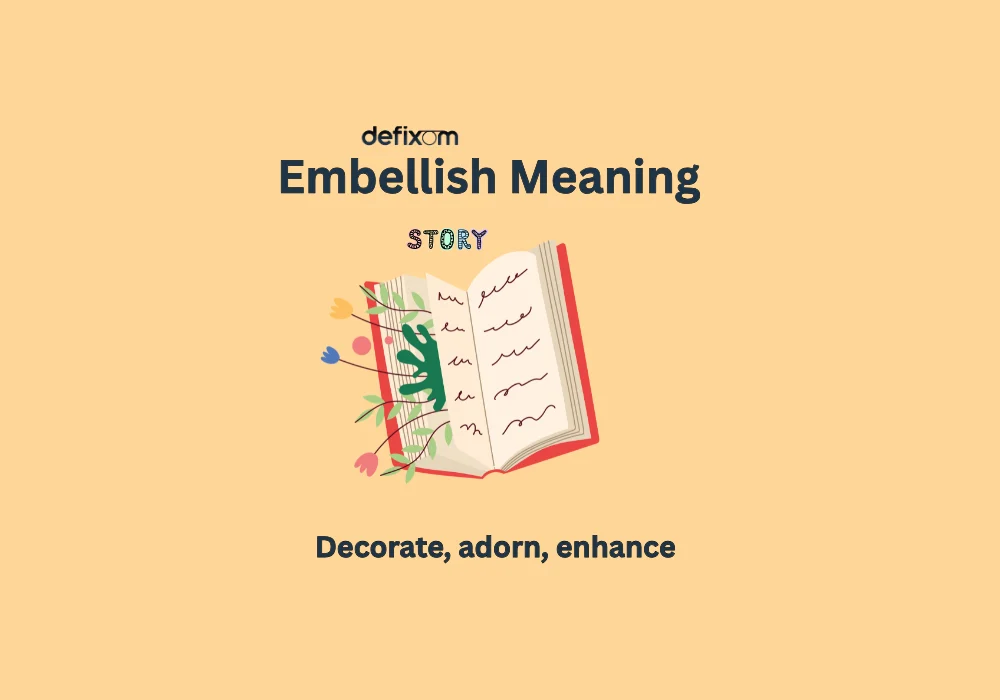
Embellish means to add extra details to something to make it sound more interesting, impressive, or dramatic—sometimes by exaggerating or stretching the truth.
In short:
- It’s about adding flair
- Sometimes harmless
- Sometimes misleading
Simple definition:
To decorate a story or statement with extra details, often making it seem better, worse, or more exciting than reality.
Origin of the Word “Embellish”
The word embellish comes from:
- Old French: embellir (to make beautiful)
- Latin: bellus (beautiful)
Originally, it meant to decorate or beautify something—like art, clothing, or architecture. Over time, the meaning shifted into storytelling and speech, where “beautifying” facts often meant exaggerating them.
Embellish Meaning in Modern Texting & Online Culture
In modern chat and internet culture, embellish often implies:
- Someone is overhyping
- Details are not 100% accurate
- A story is being dramatically enhanced
Example:
“I think he embellished the story a bit 😅”
This usually suggests exaggeration—not necessarily lying, but stretching the truth.
How to Use “Embellish” in Texts or Chat
When People Commonly Use “Embellish”
You’ll often see embellish used when:
- Calling out exaggeration politely
- Teasing a friend
- Questioning a dramatic story
- Discussing rumors or gossip
- Talking about storytelling, marketing, or social media posts
Tone Matters: Serious vs Casual Use
Casual / playful tone
- “Okay, you definitely embellished that story 😂”
- “He embellishes everything for dramatic effect.”
Serious / critical tone
- “The report appears to be embellished.”
- “Don’t embellish facts when explaining this.”
In texts, emojis and context usually signal whether it’s a joke or criticism.
Where You’ll See “Embellish” Used Most
- Text messages
- WhatsApp & Messenger chats
- Twitter/X replies
- Reddit discussions
- TikTok comments
- Online forums
Examples of “Embellish” in Conversations
Everyday Texting Examples
1 Example : Friendly teasing
A: “I ran 10 miles today!”
B: “Did you really or are you embellishing again? 🤨”
2 Example : Storytelling
“She embellished the story so much it sounded like a movie plot.”
3 Example : Social media
“Influencers tend to embellish their lifestyle for views.”
Funny or Relatable Usage
- “Bro embellished a 5-minute wait into a survival story 💀”
- “My uncle embellishes every family story like he’s in an action film.”
Professional or Semi-Formal Use
Even though it’s common in casual chat, embellish also appears in professional contexts:
- “Avoid embellishing your resume.”
- “The article seems slightly embellished for engagement.”
Common Mistakes or Misunderstandings
1. Confusing Embellish with Lying
Important difference:
- Embellish = exaggerate or add flair
- Lie = knowingly state false information
Someone can embellish without fully lying.
2. Thinking Embellish Is Always Negative
Not always! Sometimes embellishing is:
- Harmless
- Creative
- Entertaining
Example:
“He embellishes stories to make them fun.”
3. Using It in the Wrong Tone
Because embellish can sound accusatory, using it bluntly may offend someone.
❌ “You’re embellishing.”
✅ “That might be a bit embellished.”
Related Slang, Synonyms, and Abbreviations
Slang & Informal Alternatives
- Exaggerate – Most common synonym
- Overhype – Popular in social media
- Gas up – Slang for excessive praise
- Stretch the truth – Casual phrasing
- Cap – Gen Z slang for lying/exaggerating
- No cap – Meaning “not exaggerating”
Texting Examples with Slang
- “That story sounds kinda cap 🧢”
- “Stop overhyping it.”
- “He really gassed himself up.”
When to Use “Embellish” Instead of Slang
Use embellish when you want to:
- Sound polite
- Be indirect
- Avoid accusing someone of lying
- Keep a neutral or professional tone
How to Use “Embellish” Correctly (Practical Tips)
Quick Usage Guide
✔ Use it when pointing out exaggeration
✔ Add emojis to soften tone in texts
✔ Use carefully in serious conversations
✔ Avoid using it as a direct insult
Correct vs Incorrect Usage
Correct:
“I think that part of the story was embellished.”
Incorrect:
“You embellished me.” ❌
(Embellish applies to stories, facts, or details—not people.)
Why “Embellish” Is So Relevant in 2026
In 2026, online content is everywhere:
- Influencers
- Viral stories
- AI-generated posts
- Clickbait headlines
The word embellish is more relevant than ever because people are increasingly aware that:
- Stories are curated
- Posts are polished
- Facts are sometimes dramatized for engagement
Understanding embellish helps
Conclusion:
To sum it up, embellish means adding extra details to make a story or statement more interesting—often by exaggerating.
In modern texting and online conversations, it’s commonly used to point out drama, overstatement, or storytelling flair without directly accusing someone of lying.
Understanding the embellish meaning in text and chat helps you communicate smarter, catch exaggeration faster, and avoid awkward misunderstandings—especially in 2026’s content-heavy digital world.

I am a curious writer at Defixom who loves breaking down words, meanings, and ideas into simple, easy-to-understand explanations. My goal is to help readers quickly find clear answers without confusion, using clean language and real human insight.