In today’s fast-moving digital world, text messages, DMs, and comments are packed with short expressions, borrowed words, and global slang. One term you may have seen pop up in chats, social media, or even memes is “désolé.”
So what is the désolé meaning in texting and online conversations, and why does it matter?
Understanding words like désolé helps you avoid confusion, respond correctly, and sound more natural in modern chats—especially as global languages increasingly mix online.
This updated-for-2026 guide breaks down the meaning, origin, usage, examples, and common misunderstandings of désolé, so you can confidently use (or interpret) it in everyday digital conversations.
What Does “Désolé” Mean? (Definition & Origin)
Definition of Désolé
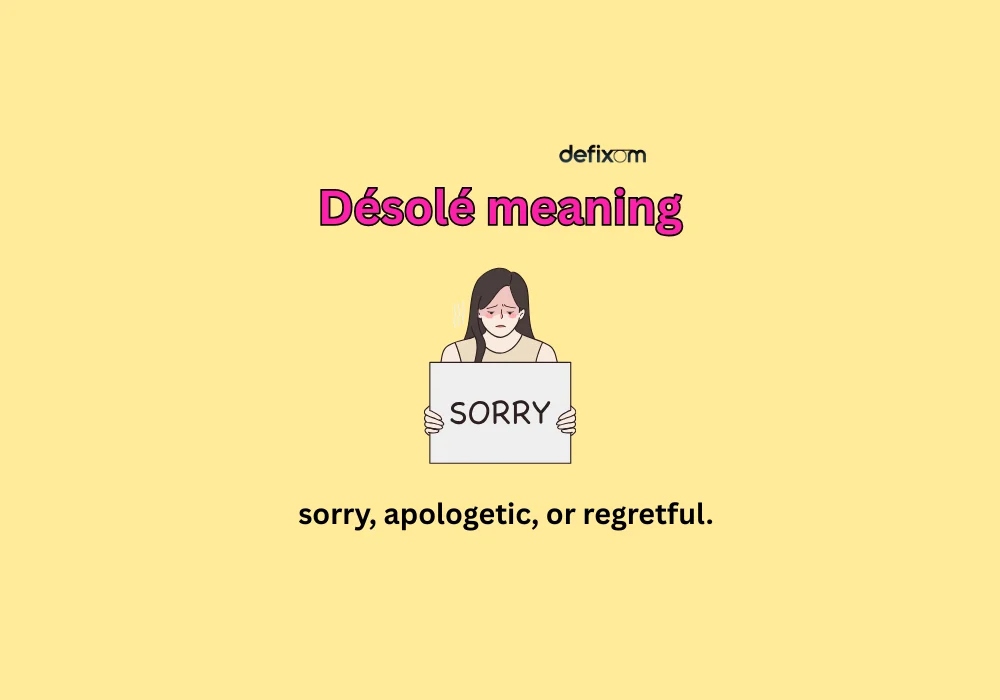
Désolé is a French word that means “sorry,” “apologetic,” or “regretful.” In modern texting and online chat, it’s often used as a softer, sometimes more stylish or playful alternative to saying sorry in English.
In simple terms:
- Désolé = Sorry
- Tone can range from sincere to casual, depending on context
Origin of Désolé
The word comes from the French verb désoler, meaning to sadden, distress, or upset. Traditionally, it expresses genuine regret or apology in French-speaking cultures.
However, in English-dominated digital spaces, désolé has evolved into:
- A borrowed expression
- A tone-setting word that can sound polite, classy, or ironic
- A way to apologize without sounding overly serious
This cross-language adoption is part of a broader trend where French, Spanish, and Korean words appear more frequently in global chat culture.
Désolé Meaning in Texting, Social Media, and Chat
In online communication, the désolé meaning depends heavily on tone and context. It’s rarely formal and often adds personality to a message.
Common Texting Meanings
In chats, désolé can mean:
- “Sorry about that”
- “My bad”
- “Oops, didn’t mean to”
- “Apologies, but…” (softened disagreement)
It’s especially common in:
- Instagram comments
- Twitter/X replies
- WhatsApp chats
- Discord conversations
- Casual DMs
Why People Use Désolé Instead of “Sorry”
People choose désolé because it:
- Sounds lighter and less heavy
- Feels international or trendy
- Adds emotional nuance
- Can soften criticism or refusal
Using désolé can make an apology feel less awkward and more conversational.
How to Use “Désolé” in Texts or Chat
Using désolé correctly is all about context, tone, and audience. While it’s easy to use, there are some unspoken rules.
Correct Situations to Use Désolé
You can use désolé when:
- You made a small mistake
- You’re replying late
- You’re declining politely
- You want to sound casual but respectful
Examples:
- Late reply: “Désolé, just saw this now.”
- Small error: “Désolé, wrong link 😅”
- Soft refusal: “Désolé, can’t make it tonight.”
Situations Where Désolé May Not Fit
Avoid using désolé when:
- A serious apology is required
- You’re in professional or legal communication
- The recipient may not understand foreign slang
In formal emails or workplace settings, plain “sorry” or “I apologize” is usually safer.
Examples of “Désolé” in Real Conversations
Seeing désolé in action makes its meaning much clearer. Below are realistic, modern examples you might encounter online.
Casual Texting Examples
- “Désolé, I forgot to reply yesterday 😭”
- “Désolé for the typo, autocorrect betrayed me.”
- “Désolé, I thought the meeting was tomorrow.”
Social Media & DMs
- “Désolé but that outfit is actually fire 🔥”
- “Désolé, this meme took me out 😂”
- “Désolé I’m late to the trend.”
Playful or Light Apology
- “Désolé not désolé 😌”
(Meaning: I’m “sorry,” but not really)
This version is especially popular in meme culture and sarcastic replies.
Emotional Tone: What Désolé Really Conveys
Unlike “sorry,” désolé can subtly shift emotional tone.
Tone Variations
Depending on context, désolé can sound:
- Polite
- Playful
- Detached
- Sincere
- Lighthearted
For example:
- “Désolé…” alone may feel distant
- “Désolé!! 😭” feels emotional or dramatic
- “Désolé but no.” feels firm yet polite
This flexibility is a big reason it thrives in digital conversations.
Common Mistakes or Misunderstandings
Despite its simplicity, désolé is sometimes misunderstood.
1 Mistake : Thinking It’s Always Sarcastic
While désolé can be sarcastic, it’s often genuinely apologetic. Emojis and context usually clarify the tone.
2 Mistake : Using It in Formal Settings
Using désolé in:
- Job emails
- Business proposals
- Customer service responses
…may come across as unprofessional unless the brand tone is casual.
3 Mistake : Assuming Everyone Understands It
Not all audiences are familiar with French loanwords. If clarity matters, stick to “sorry.”
Désolé vs. Sorry vs. My Bad
Understanding how désolé compares to similar phrases helps you choose the right one.
| Phrase | Tone | Best Use |
|---|---|---|
| Désolé | Polite, casual | Texting, DMs, social |
| Sorry | Neutral | Universal |
| My bad | Informal | Friends, casual chats |
Désolé sits comfortably between sorry and my bad—polite but relaxed.
Related Slangs and Abbreviations
If you’re learning the désolé meaning, you may also want to understand similar modern expressions.
Related Apology Slang
- MB – My bad
- Sry – Short for sorry
- Apologies – Slightly formal
- Oops – Casual acknowledgment of a mistake
Foreign Words Used in English Chats
- Gracias – Thanks
- Adiós – Goodbye
- Ciao – Bye
- Merci – Thank you
- Déjà vu – Familiar feeling
Why Désolé Is Trending in 2026
Cultural Mixing Online
With TikTok, Instagram Reels, and global meme culture, languages mix more than ever. French words, in particular, are seen as:
- Stylish
- Expressive
- Emotionally nuanced
Aesthetic & Personality
People choose words that reflect personality. Désolé adds flair without extra effort.
Short, Soft, and Effective
In a world of fast replies and short attention spans, désolé delivers apology without sounding dramatic.
How to Use Désolé Correctly (Quick Guide)
Before sending désolé, ask yourself:
- Is this a casual conversation?
- Does the other person understand basic slang?
- Am I apologizing for something minor?
If yes, désolé works perfectly.
Best Practices
- Pair with emojis for clarity
- Use sparingly for authenticity
- Avoid in serious or professional situations
Conclusion: Final Thoughts on Désolé Meaning
To sum it up, the désolé meaning in texting and chat is a modern, casual way to say “sorry” with a touch of personality.
Borrowed from French, it’s widely used in social media, DMs, and informal conversations to express light regret, politeness, or playful apology.
As digital language continues to evolve in 2026, expressions like désolé highlight how global culture shapes the way we communicate online. When used correctly, it can make your messages sound more natural, friendly, and current.

I am a curious writer at Defixom who loves breaking down words, meanings, and ideas into simple, easy-to-understand explanations. My goal is to help readers quickly find clear answers without confusion, using clean language and real human insight.